G2
01 / Utility layout
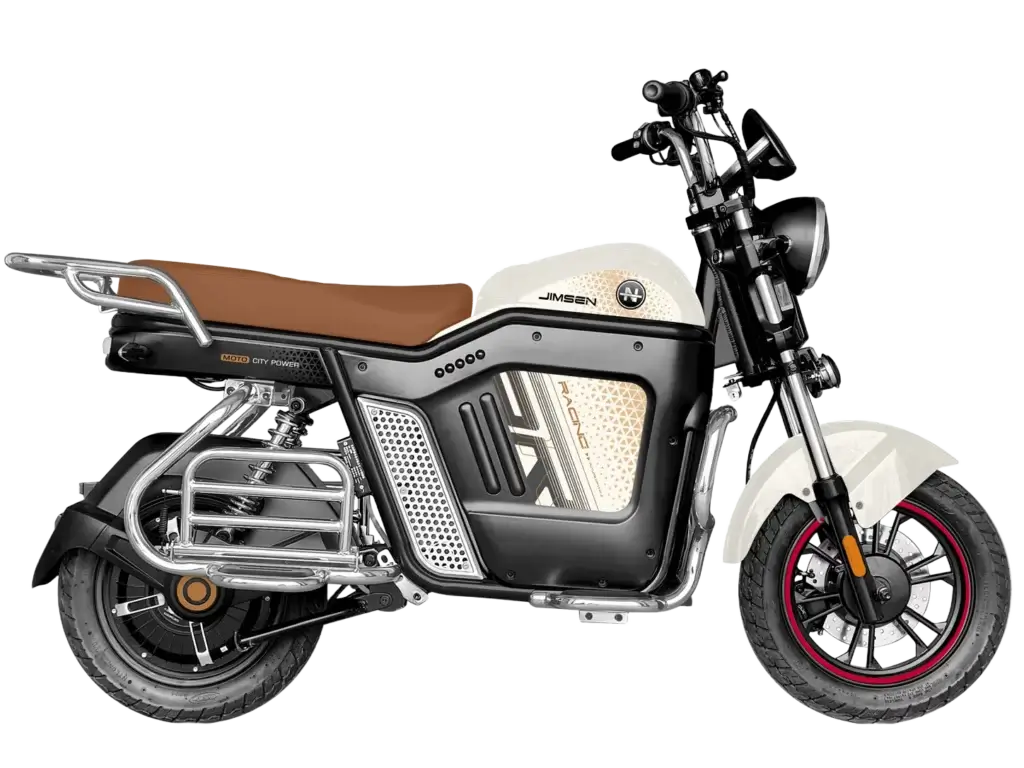
Choose G2 when a rear carrier and protective side bars suit your utility product line. Specify the required carrier load with your enquiry.
- Length
- 1740 mm
- Seat height
- 760 mm
- Tyres F/R
- 90/90-12
Compare four electric motorcycle platforms for dealer and OEM projects. Start with vehicle size, seat height and body layout, then define the battery and market requirements for your selected configuration.

Model selection · Brand configuration · Sample approval
Compare body layout, seat height and tyre size across four models.

Choose G2 when a rear carrier and protective side bars suit your utility product line. Specify the required carrier load with your enquiry.

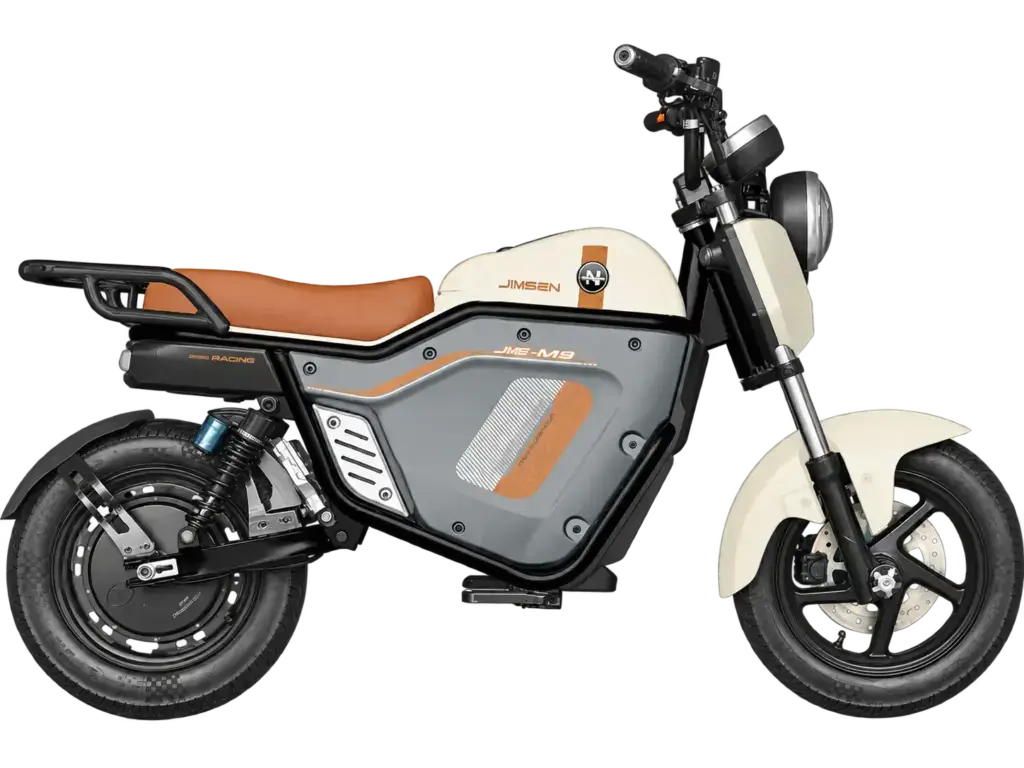
G2-2.0 has different side panels and carrier styling. Its catalogue dimensions and seat height match G2, so compare the body layout rather than expecting a smaller vehicle.

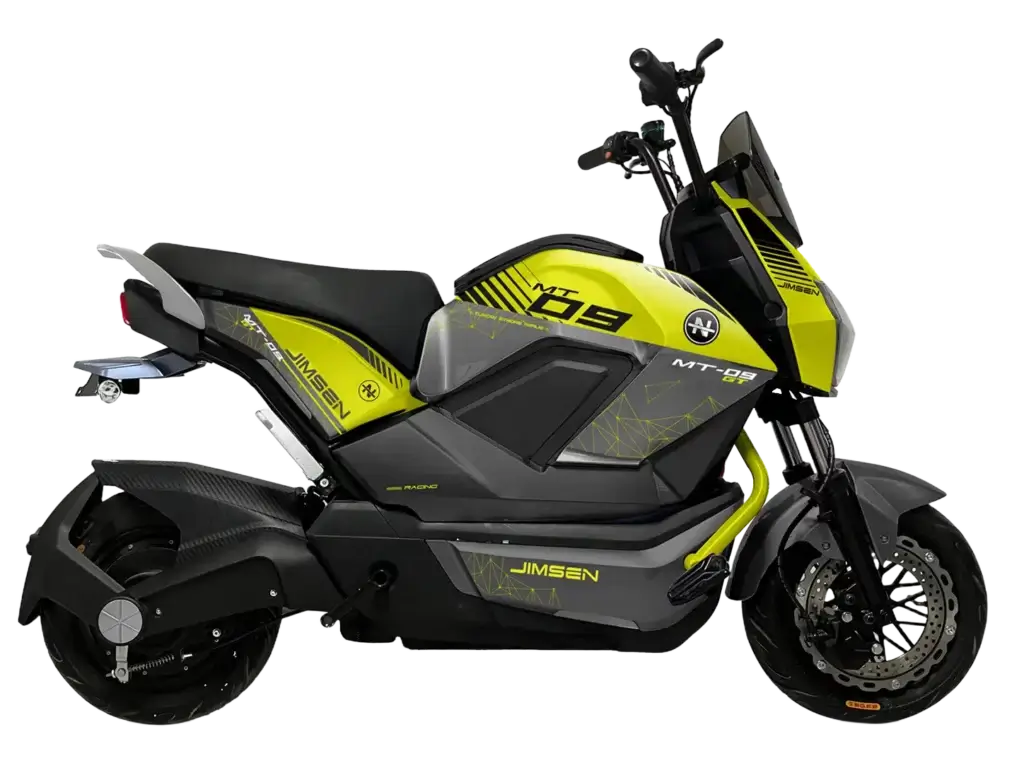
At 1600 mm long and 570 mm wide, X2 has the smallest listed footprint of these four models. Start here when vehicle size is the first shortlist constraint.

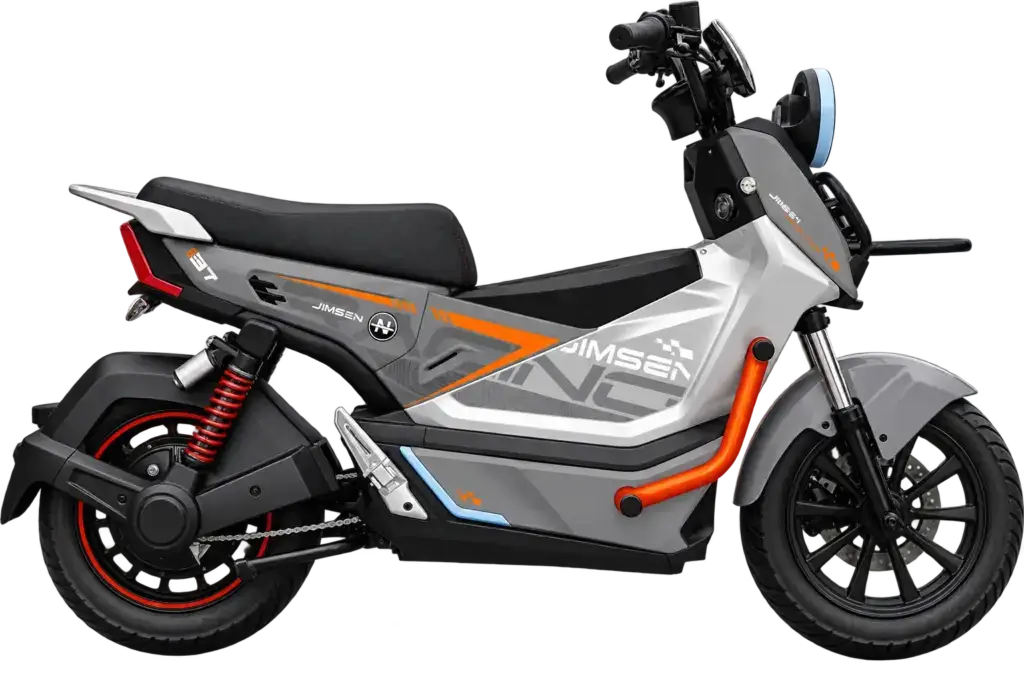
X3 lists a 770–810 mm seat height and supports removable-battery configurations. It is the starting point here for comparing battery handling away from the parking location.
Specifications below come from Jimsen model documents. Agree the final configuration before sample approval.
Model email links include the selected model and open your email app. Prefer a web form? Contact Jimsen.
X2 has the smallest listed footprint. G2 and G2-2.0 share the same listed dimensions; X3 has the higher seat-height reference.
Swipe to compare models. The selection-point column stays in view.
| Selection point | G2 | G2-2.0 | X2 | X3 |
|---|---|---|---|---|
| Dimensions L × W × H, mm | 1740 × 720 × 1100 | 1740 × 720 × 1100 | 1600 × 570 × 1065Shortest and narrowest listed body | 1710 × 750 × 1135 |
| Seat height | 760 mm | 760 mm | 760 mm | 770–810 mm |
| Tyres Front / rear | 90/90-12 | 90/90-12 | 3.0-10 | 90/90-12 |
| Brakes | Front and rear 220 mm discs | Front and rear 220 mm discs | Front disc; rear 220 mm disc | Front and rear hydraulic discs |
| Body-layout difference | Rear carrier and protective side bars | Alternative side panels and carrier styling | Enclosed urban body | Battery-access configuration options |
| Model detail | Open G2 | Open G2-2.0 | Open X2 | Open X3 |
Sources: Jimsen motorcycle brochure and X2, G2, G2-2.0 and X3 model sheets. Figures apply to the documented configurations.
If users must carry the battery indoors, start with a removable-battery configuration and check its weight and removal clearance. If charging happens beside the vehicle, battery removal may be less important than access to a safe charging location.
Start with X3 for a removable-battery configuration. Include the required pack capacity, carrying weight and charging location in your project brief.
Explore X3 battery configurationsKeep the electrical system together. The battery, controller and approved charger must match the selected build. Removability does not mean packs are interchangeable.

Choose an existing model for a dealer order, add branding for a private-label line, or request engineering review for body and system changes. Use our manufacturer procurement guide when comparing suppliers.
Explore OEM/ODM ↗Send your destination market, sales channel and preferred model. Describe daily use and where charging takes place.
Separate required battery, body, branding and packaging changes from preferences. Jimsen can review feasibility and identify items needing development.
Agree the battery, controller, charger, braking hardware and packaging in one specification. Samples are paid; any credit against a bulk order must be agreed. Record the accepted sample and inspection requirements before production.

Every completed vehicle is inspected. For a motorcycle order, agree the specification and acceptance checks for the selected configuration, and request records tied to that model and batch.
See the production processAnswers for buyers moving from a model shortlist to a configuration or sample discussion.
They are separate catalogue models. Their listed dimensions are both 1740 × 720 × 1100 mm, with a 760 mm seat-height reference, but their bodywork differs. Electrical-system and weight figures must come from the selected model’s own specification.
Start with X3, which has removable-battery configuration options. The selected pack, its weight and removal access matter when charging away from the parking location.
No. Start with the required body size, rider fit and load, then compare the motor, controller and battery as a complete configuration. A larger wattage number alone does not establish hill performance or usable range.
Jimsen supports OEM/ODM projects. Branding, selected components and packaging can be reviewed for the chosen platform. Structural or system changes require engineering and sample assessment. See OEM/ODM project options.
No. Vehicle classification and document requirements depend on the destination and exact configuration. Request the documents for the build being quoted before committing to a market launch. Name the model, battery and controller version, destination and required document list in the enquiry. Ask which documents are already available and which still need review, testing or buyer action.
Send the model, destination, quantity, intended use and charging setup, plus required customisation. Request an itemised quote for the agreed vehicle and battery, charger, branding, packaging, spare parts and freight, with trade terms and sample conditions. Compare quotations only when they cover the same configuration.
Request carton dimensions, units per carton, gross weight and a loading plan for the selected build; vehicle dimensions alone cannot establish container capacity. List the battery, controller, charger and brake-part references in the order specification. Agree the initial spare-parts list and the information needed to identify replacement parts, including the model, build version and component labels. Keep the sample approval, component references, artwork and manual language under one dated specification. Confirm any proposed substitutions in writing before production, including whether they change the sample checks or document requirements.

Send your selected model, destination and quantity, with battery, branding and packaging requirements. Request the proposed specification, itemised quotation and paid-sample terms together.