Which model should I review for small-space storage?
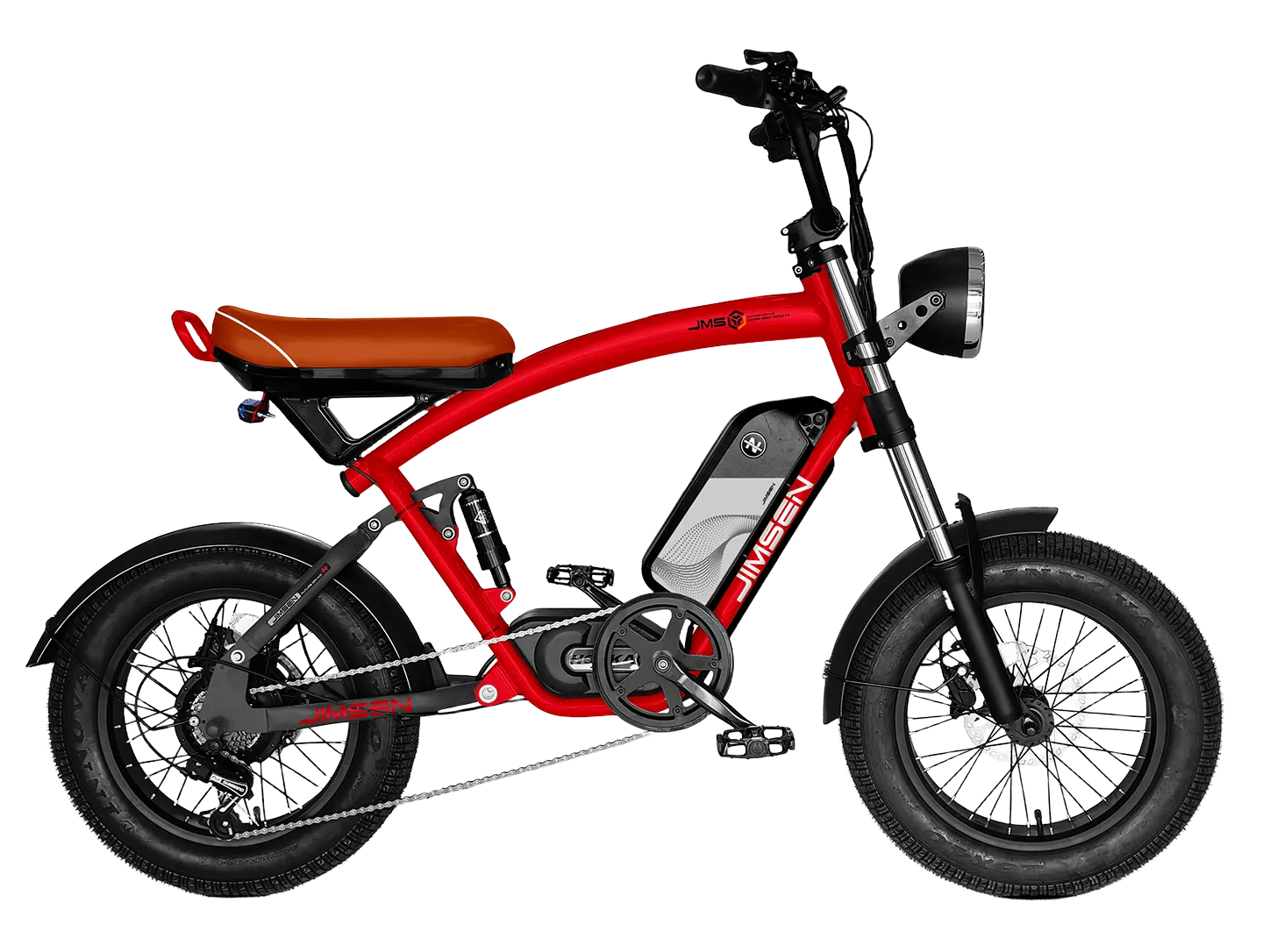
E3, because its main frame folds. Check its measured folded envelope against your available space. E1 has a non-folding frame.
Does a folding bike mean it is easy to lift?
No. Folding reduces the stored footprint; it does not reduce the bike’s weight. For stairs or car loading, compare the complete-bike weight, including the selected battery, with the user’s lifting limit.
Can both models charge away from the bike?
The brochure identifies removable batteries for E1 and E3. E1's pack is externally mounted; E3's is built in. Verify the removal procedure and the matching charger for the selected version.
Can I compare battery capacity using Ah alone?
Compare nominal Wh as well: nominal voltage multiplied by Ah. For the listed references, E1's 48 V × 15 Ah is 720 Wh; E3's 36 V × 10 Ah is 360 Wh. Nominal Wh does not measure actual range or make the packs interchangeable.
Does the listed motor configuration establish road legality?
E1’s listed reference is 48V 500W and 40 km/h; E3’s is 36V 250W and 25 km/h. If your European brief requires 25 km/h assistance, review E3 first and confirm the assistance behaviour and required documents for that build. E1’s listed 40 km/h version is not an equivalent configuration.
How do I start an OEM order?
Send the model, destination, expected quantity, intended use, storage and charging needs, and required branding. Jimsen can review configuration feasibility and propose the specification and paid-sample terms. MOQ and timing are project-specific.