
E-Bike vs Electric Moped: Differences and How to Choose
An e-bike offers pedal-assisted riding on a bicycle platform. An electric moped usually offers seated, motor-led travel. For commuting, that difference shapes the ride. For dealers and delivery fleets, it also affects where the vehicle can operate, how it is charged and what local service involves.
A folding frame may suit a small apartment but still be awkward to carry upstairs. A moped with a rear box may have room for parcels, yet need a different charging arrangement to finish consecutive shifts. The useful comparison is how each vehicle fits that daily work, from the first ride to a repair or replacement part.
Here, “moped” means an electric model rather than a petrol one. Seller descriptions can be less precise: “scooter” may mean a standing kick scooter or a seated vehicle, while “moped-style e-bike” often refers to appearance.
What is the difference between an e-bike and an electric moped?
An e-bike combines functional pedals with an electric assistance system. Some versions also have a throttle. An electric moped commonly has a seated scooter layout, with the motor doing the work. Pedal function, motor controls and the destination’s rules determine how a particular model is classified.
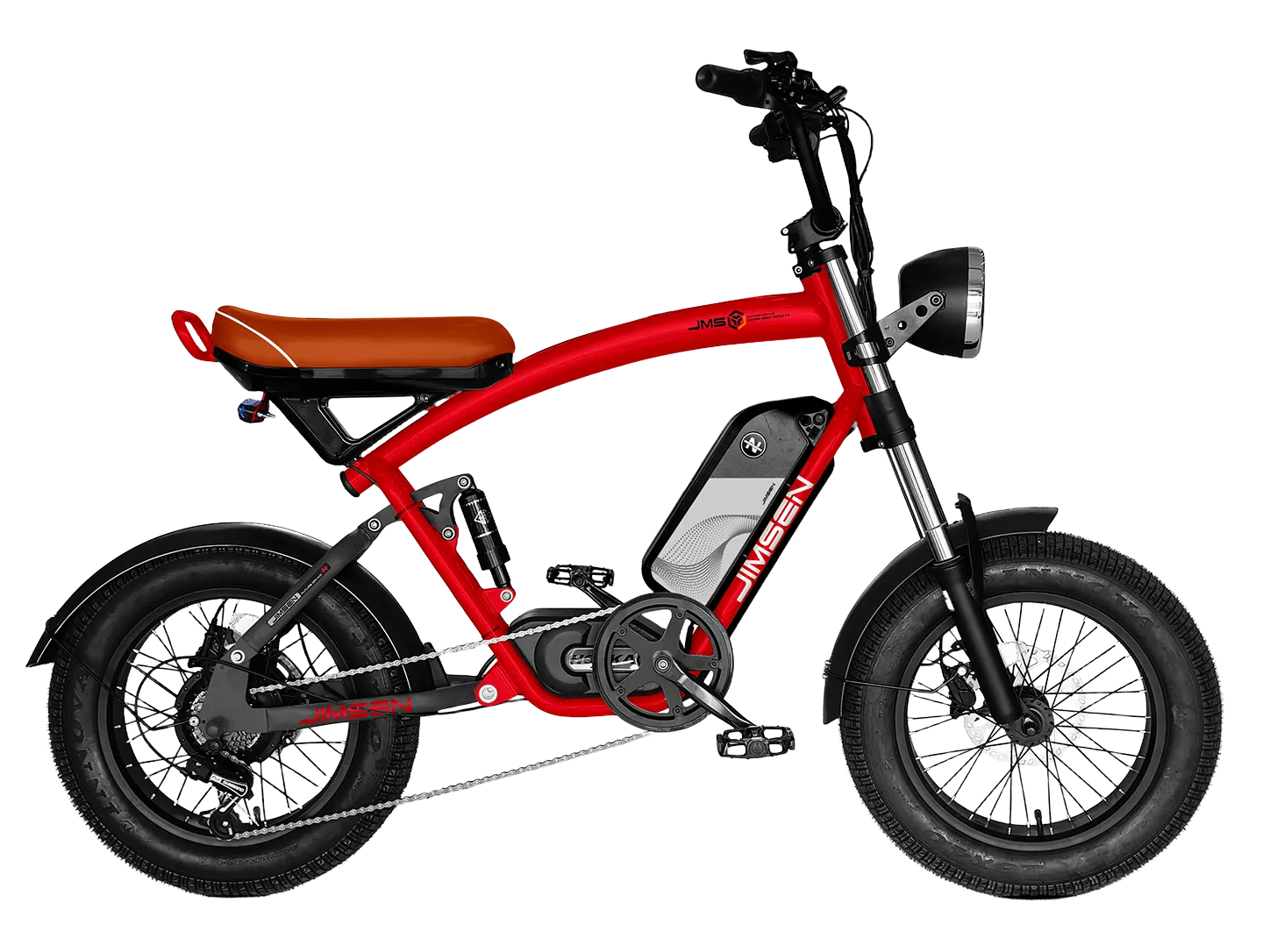
A bench seat, small wheels and motorcycle-style bodywork can all appear on a vehicle sold as an e-bike. A specification and a test ride reveal more than its silhouette: can the rider pedal comfortably, how does the motor engage, and what happens when assistance stops? The term “electric scooter” needs clarification too, especially in a quotation covering seated vehicles.
On a phone, swipe each table sideways to read the remaining columns.
| Term used by the seller | Layout and operation | Details that matter | Common mistake |
|---|---|---|---|
| E-bike | Bicycle platform with usable pedals and electric assistance; throttle arrangements vary. | Pedal function, assistance/throttle behaviour, specified motor output and control settings. | Assuming every product called an e-bike has the same road access. |
| Moped-style e-bike | Bicycle marketed with moped-like styling; inspect its actual pedal and propulsion system. | The same technical and legal inputs as other e-bikes, plus rider fit and practical pedalling. | Treating a bench seat or motorcycle appearance as a legal category. |
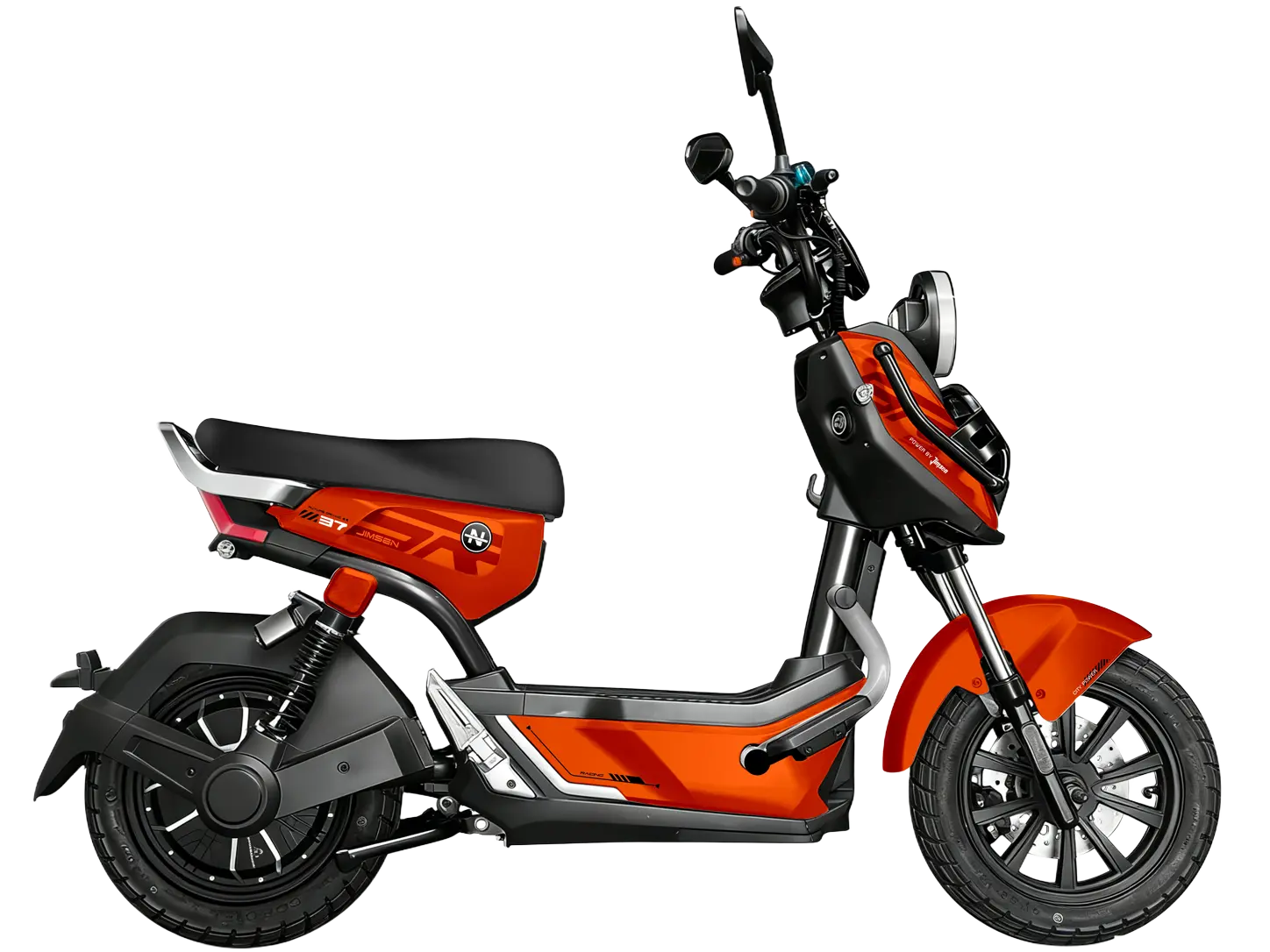
| Electric moped | Usually seated and motor-led, often with a footboard or scooter-style body. | Propulsion, complete specification, market classification and the required vehicle documents. | Assuming a lower power label automatically makes it licence-free. |
| Electric kick scooter | Standing deck and handlebar layout. | Its own construction, operating limits and destination rules. | Including it in a seated-moped quote because both are called scooters. |
Higher-power motorcycle platforms have their own specifications and service requirements. Jimsen’s electric motorcycle category covers those options; changing a motor rating alone does not describe an equivalent upgrade to a moped.
Road access and vehicle classification
Product compliance and road access answer different questions. A vehicle may meet a product requirement while still needing registration, insurance or a licensed rider for its intended use. Cycle-lane access adds another local question. This matters when a delivery route depends on roads or paths available to only one of the two vehicle types.
The US CPSC bicycle guidance, for example, describes a federal low-speed electric bicycle with operable pedals, a motor below 750 W and a motor-only speed below 20 mph under the stated test conditions. That definition concerns product regulation. Road and cycle-route permissions are separate.
The UK’s EAPC rules include usable pedals, a continuous motor rating no higher than 250 W and a 15.5 mph motor-propulsion limit. Certain throttle-operated builds also need approval. The different thresholds explain why a single worldwide speed-and-power comparison would be misleading.
The California DMV guidance sets out distinctions between mopeds and scooters, including licensing and registration. Those details apply to California. For the separate US e-bike class question, see our Class 1, Class 2 and Class 3 guide.
A sample enquiry is easier to assess when it names the destination, intended vehicle category, operating mode and route. Jimsen’s catalogue categories help buyers find a platform; approval for a particular market depends on the build and the applicable documents.
Power, battery capacity and the rest of the vehicle
A motor rating says little about carrying capacity or stopping performance on its own. Battery figures need context too: Ah measures charge capacity, while nominal Wh equals voltage multiplied by Ah. A larger Wh figure describes more nominal stored energy, but route distance also depends on load, speed, hills, stops and riding conditions.
Weight, storage space and battery access vary by model. Some e-bikes are difficult to lift; some seated mopeds have battery arrangements that do not suit charging indoors. These details often decide which vehicles remain on a shortlist.
| Selection point | E-bike | Electric moped | Useful evidence |
|---|---|---|---|
| Riding position and effort | Practical pedalling, frame fit and assistance behaviour. | Seated control, foot placement and low-speed handling. | Rider assessment on the intended sample. |
| Storage and movement | Complete bicycle dimensions; folded size where the model supports folding. | Parking space, entrance access and moving the complete vehicle. | Measured envelope and weight with battery and fitted accessories identified. |
| Charging | Battery removal, where supported, and the matching charger. | Battery access and the matching charger; these vary with the build. | Approved battery/charger references, instructions and sample access check. |
| Load and attachments | Whole-vehicle load plus separate rack, basket and mounting limits. | Whole-vehicle load plus separate box/carrier limits and passenger permissions. | Model and accessory limits for the supplied configuration. |
| Task distance | Assistance use, rider effort and stop-start operation. | Motor-led use, speed, load and stop-start operation. | A route test with consistent conditions and an agreed stopping point. |
| Local repair | Bicycle servicing, electrical diagnosis and version-specific parts. | Selected brake, tyre, body and electrical components, plus service access. | Tools, instructions, parts identification and an agreed support route. |
The motor wattage guide covers power selection in more detail. The charger compatibility guide explains the electrical and communication requirements behind a charger match, beyond the shape of the plug.
Everyday fit: riding, storage and charging
Storage can settle the comparison before range becomes relevant. For someone living upstairs, the complete lifting weight and handling method matter every day. For a rider using a bicycle-only route, the vehicle’s eligibility for that route may be the deciding factor.
Battery access connects storage with charging. A removable pack can make indoor charging possible, provided its weight, removal method, locking and charger location work for the rider. Cargo equipment creates similar trade-offs: a box adds useful space, but its mounting limit and load position affect how the vehicle handles.
Two common buying situations
Limited storage: imagine a commuter with a narrow entrance and little room indoors. A folding e-bike may solve the space problem if its folded dimensions fit. Carrying it is a separate question: the weight of the selected vehicle, including its battery, matters as much as the folding mechanism.
Seated travel with ground-level parking: a rider who prefers motor-led travel and has a suitable charging space may find a moped layout more comfortable. The remaining questions concern road eligibility, control at low speed, loaded stopping and access to repairs. The seated layout alone does not establish a speed or range advantage.
Where both layouts fit, a ride on each candidate can reveal differences that a catalogue leaves out: reach to the controls, comfort over the intended route, manoeuvring into a parking space and access to the charging connection.
Stocking and supporting a dealer product line
For a dealer, the comparison continues after the test ride. The sales team needs to explain assembly, controls and charging, and the service team needs a way to diagnose a fault and identify the correct replacement part. A narrow model range can make that work easier, particularly when battery, display or controller versions differ.
- Customer fit: storage, rider requirements and local road access help distinguish one commuter product line from another.
- Stock complexity: extra colours and battery versions add inventory, parts and documentation work.
- Handover: assembly, controls, brakes, charging and accessories belong in the vehicle check and customer demonstration.
- Local repairs: service capability depends on the people, tools and diagnostic information available.
- Parts records: model, batch and component references help distinguish compatible replacements from similar-looking displays or chargers.
- Warranty terms: coverage, claim evidence, labour, freight and remedies affect the dealer’s costs as well as the headline warranty period.
Colour, logo, manual and carton requirements can be discussed alongside an existing-model order. Electrical or structural changes, and changes to the intended market, may involve further engineering and documentation. The Jimsen OEM/ODM page explains that process; the available options depend on the model and project.
Choosing an e-bike or electric moped for delivery
Delivery work puts the comparison under a different load. Frequent starts, hills, changing cargo and short charging breaks can make a shift far more demanding than a steady commute. A description of both a typical shift and the busiest expected shift gives the supplier something useful to work with.
| Input | Details | Why it affects selection |
|---|---|---|
| Destination and route | Country/city, permitted route types, parking and depot access. | An otherwise suitable vehicle may not be usable on the required route. |
| Distance and duty | Distance per shift, shift duration, stops, idle periods and consecutive shifts. | Working distance, repeated starts and recovery time determine the duty to test. |
| Rider and cargo | Rider, carried equipment, goods, fitted box/rack and changing load during the route. | Whole-vehicle and individual accessory limits are separate checks. |
| Road and environment | Measured gradients with units, surfaces, weather and expected temperature range. | A short slope or mild-weather sample run may not represent the working route. |
| Charging window | Where charging happens, available time, approved charger and whether pack removal is required. | The fleet needs a repeatable charging process between shifts. |
| Service and cover | Repair location, staff, parts identification, replenishment arrangements and backup vehicles. | A vehicle unavailable for work changes the fleet’s usable capacity. |
When delivery work favours one layout
A bicycle platform may suit routes where eligible e-bikes have useful access, or where storage and movement favour that layout. A seated moped is a candidate when riders want motor-led travel or practical pedalling becomes difficult with the intended load, provided the required roads are available to it. Either choice still needs suitable cargo mounts and predictable handling when loaded.
Consecutive shifts can expose a charging problem even when the vehicle completes the first shift comfortably. More time between duties, another vehicle or a different charging arrangement may be needed. Battery swapping is possible only on builds designed for it, with compatible packs and chargers and a workable handling and identification process.
Shared-rental use and delivery work involve different loads, parking habits and maintenance demands. A rear box in a product photograph shows a layout worth investigating; its inclusion, mounting limits and performance on a delivery route still need to be established for the order.
What a delivery sample trial needs to show
A useful trial ties the results to the sample actually ridden: vehicle version, battery, charger, controller settings and fitted accessories. If a temporary component is used, the record identifies it so that any affected checks can be repeated with the production component.
For a range or energy comparison, the route, total load, target speed and weather need to be as similar as practical. E-bike assistance level and rider effort also affect the result. Where the vehicles use different permitted routes or speeds, completed deliveries and shift coverage provide a more useful comparison than treating the rides as an equal-condition efficiency test.
| Check | Record | Acceptance basis | If it fails |
|---|---|---|---|
| Route eligibility | Market category, applicable documents, rider and route requirements. | The intended route is available to this build and operation. | Resolve classification or change the proposal before road testing. |
| Loaded task | Rider/cargo/accessory load, stops, gradients, distance and ending condition. | Completes the agreed duty within the approved operating limits and charging plan. | Review the task or configuration; repeat the affected checks. |
| Controls and stopping | Rider access, low-speed control, loaded stopping observations and parking. | Manufacturer limits and a competent assessor’s approved test procedure. | Stop the trial where safety is affected; resolve the issue before acceptance. |
| Charging turnaround | Starting/ending charge conditions, charger reference, time and access. | Fits the agreed interval between duties using the approved equipment. | Revise the charging arrangement or duty allocation. |
| Maintenance and parts | Approved routine service, part identification, tools and required assistance. | The local team can carry out its agreed service responsibilities. | Close the instruction, tool or support gap before fleet deployment. |
| Production match | Sample version, approved changes, manuals, accessories and inspection record. | The quotation and production specification match the accepted build. | Assess the substitution and repeat any affected checks. |
The table is a worksheet for a sample trial. Test methods and acceptance values depend on the vehicle’s operating limits and the project requirements; braking distance, load and gradient entries come from the relevant specification or test.
The result may be an accepted configuration, a change followed by another trial, or a decision that the vehicle does not fit the job. Linking that result to the sample version makes it useful when the production order is prepared. Our OEM/ODM manufacturing process guide covers the steps from sample approval through production and shipment.
Purchase price and the cost per delivery
Purchase price is one part of fleet cost. Charging equipment, servicing, extra vehicles and staffing can change the comparison. Quotes are most useful when they cover equivalent configurations and delivery terms, with running costs estimated over the same period and duty.
A fleet budget can include vehicles and freight, charging equipment, cargo accessories, initial spare parts, maintenance, replacement components, applicable insurance or registration, and financing. Supplier prices and the operator’s estimates have different sources, so keeping them separate makes the calculation easier to update. The supplier procurement guide covers configuration and quotation scope.
Cost per completed delivery is the cost allocated to delivery work divided by successfully completed deliveries in the same period. Mixed-use vehicles need a consistent allocation method. Repair time, charging time and cancelled work help explain changes in the result. Extra batteries and chargers are counted once under the chosen purchase or depreciation method; the same lost contribution from downtime is also counted only once.
The lower-cost option emerges from those quotes and operating figures. A category label alone cannot support a savings percentage, especially when the vehicles finish different amounts of work.
Jimsen e-bike and electric moped options
In the electric bike range, E1 provides an urban bicycle layout and E3 a folding platform. The electric moped range includes G1, K2 and K3-2.0, with differences in body size, storage layout and brake hardware. These are practical starting points for a sample enquiry.
| Platform | Layout and catalogue reference | Sample question |
|---|---|---|
| E1 urban commuter e-bike | Urban bicycle layout for a commuter product line. | Does the riding position and complete vehicle fit the customer’s route and storage? |
| E3 mini folding e-bike | Folding platform where storage envelope matters. | What are the approved folding procedure, folded dimensions and lifting weight for the selected build? |
| G1 step-through electric moped | Reference layout with a rear storage box; listed body length 1850 mm. | Is the box included, and what mounting and load requirements apply? |
| K2 urban electric moped | Step-through platform with front and rear disc brakes; listed body length 1700 mm. | Which brake and electrical versions are in the quote, and can local service support them? |
| K3-2.0 compact electric moped | Listed body length 1550 mm, shorter than G1 and K2 in this group. | Does the selected sample meet rider, charging and parking requirements? |
The listed lengths describe the bodies in the moped catalogue, rather than carton size or turning space. They help narrow the shortlist; a delivery trial determines whether the chosen build suits the route. K3-2.0 battery access remains a point for written confirmation when planning charging away from the vehicle. Quoted weights also need a clear battery-and-accessory basis, while range and climbing comparisons need the conditions behind the figures.
Requesting a sample or OEM quotation
A short enquiry can cover the destination, intended customer or task, candidate category and order quantity. For delivery work, shift distance, stops, rider and cargo load, gradients with units, charging breaks and local service arrangements help define the sample. Accessories, branding and packaging complete the brief.
The next discussion can then cover a proposed platform, configuration, supporting documents, open feasibility questions, an itemised quote and paid-sample scope. Jimsen’s OEM/ODM enquiry route is available for these projects. Compatibility, MOQ and timing depend on the agreed requirements.
Discuss your vehicle requirements with Jimsen, including the route and charging arrangements if the order is for delivery work.
Questions about e-bikes and electric mopeds
Is a moped-style e-bike the same as an electric moped?
“Moped-style” describes the look. A vehicle with that styling may still have usable pedals and bicycle-type assistance. Its specification, motor operation and destination rules determine the category.
Does a throttle automatically make an e-bike a moped?
That depends on the market and the way the throttle operates. Pedal capability, power, speed and approval requirements can all affect classification. A throttle by itself is not enough to decide.
Which is better for food delivery?
An e-bike may fit a route that relies on eligible bicycle access; a moped may fit seated, motor-led work. The deciding details are loaded handling, shift completion, charging time and repair support. A sample run on the intended duty brings those differences into view.
Does a removable battery solve fleet charging?
A removable battery can make charging away from the vehicle easier on a build that supports removal. The pack still has to be manageable, with a compatible charger, suitable storage and enough time between shifts.
Can a lower-power moped use bicycle lanes?
Cycle-lane access follows the local vehicle category and route rules. A lower motor rating does not, on its own, give a seated moped the same access as an eligible e-bike.
What must match between the sample and the production order?
The vehicle specification, critical components and software, accessories, instructions and applicable documents should correspond to the accepted sample. A changed component may need another check if it affects the trial results.