
E-Bike Tire Sizes Explained: Read ETRTO Before You Buy
“20-inch,” “28-inch” and “29-inch” are useful shopping labels, but they are not a complete fit specification. Photograph the whole sidewall marking and identify the rim before ordering. This guide is for bicycle-type e-bike tires, not electric-motorcycle tire sizing.
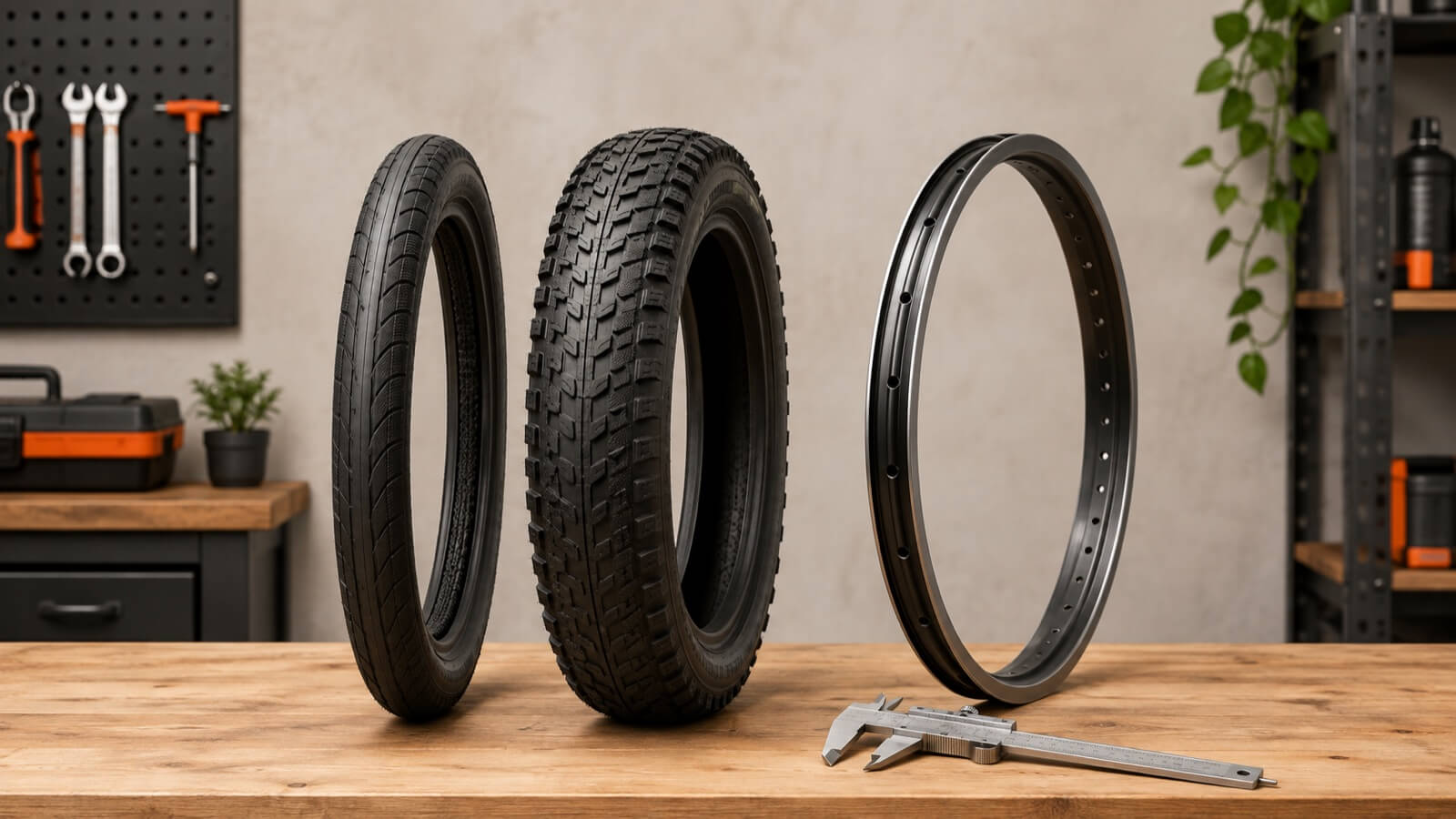
Read the two numbers separately
The tire bead seats on the rim. Its diameter is different from the outside diameter across an inflated tire. ETRTO puts the nominal width before the bead-seat diameter, both in millimeters. Inch and French labels describe size differently, which is why converting a shopping label by eye can produce the wrong purchase.
| Example marking | Nominal width | Bead-seat diameter | What still needs checking |
|---|---|---|---|
| 40-622 | 40 mm | 622 mm | Approved rim width, clearance and tire construction |
| 50-622 | 50 mm | 622 mm | A wider option is not automatically approved on the same wheel |
| 40-635 | 40 mm | 635 mm | Not a substitute for 40-622: the bead-seat diameter differs |
These are marking examples, not a recommendation for any Jimsen model. For this comparison, 50 − 40 = 10 mm of nominal width difference; it is not a promise of exactly 5 mm less clearance on each side once fitted.
Why 700C and 29-inch labels can be confusing
Many 700C road tires and 29-inch mountain-bike tires share a 622 mm bead-seat diameter, despite different names. Their widths and intended wheels can differ substantially. Conversely, similar-looking inch labels do not always identify the same diameter. Schwalbe’s size guide distinguishes the nominal formats; Michelin also explains why ETRTO is the more precise starting point.
Do not read “same diameter” as “interchangeable.” A supplier listing only “fits 28-inch e-bikes” has not yet answered the rim-width, clearance or construction questions. Ask for the full marking and the exact product version.
Work through five fit checks
- Diameter: match the tire’s bead-seat diameter to the rim specification. Stop if the values differ.
- Rim width: check the tire maker’s permitted combinations and the rim manufacturer’s instructions. Use internal rim width, not a guessed outside measurement.
- Construction: confirm tube-type or tubeless compatibility, including any hookless restrictions, required rim tape, valve and sealant.
- Clearance: confirm space at the frame, fork, fenders and other nearby parts using the bike maker’s requirements.
- Application: confirm the permitted load, operating conditions and suitability for the exact e-bike. The word “e-bike” on a sales page is not the complete specification.
Schwalbe notes that fitted dimensions can change with rim width, pressure and the tire itself. A tire that clears a frame in one photograph may not clear your bike. Avoid adopting a universal clearance number from a different model.
Can you put a wider tire on an e-bike?
Possibly, but a size change needs approval from the relevant bike, wheel and tire specifications. Start with the intended reason: replacing an unavailable size, changing tread for your route, or seeking a different ride feel. Then ask whether an approved tire in the existing size already solves the problem.
For example, a commuter considering 50-622 instead of 40-622 has passed only the diameter comparison. The remaining decision is whether that rim supports the width, the fitted tire clears the bike, and the tire meets the intended-use requirements. If any answer is missing, keep the proposed change unapproved.
Do not use extra inflation pressure to force a poorly seated tire into service. Follow the mounting instructions and all applicable tire and rim limits. For pressure selection after fit is confirmed, use the e-bike tire pressure guide.
Match the inner tube as a separate part
A tube may cover a stated range of tire widths, rather than one exact size. Check that range against the tire, then confirm valve type and length for the rim. Schwalbe’s tube finder asks for tire size and valve type; a familiar wheel-size label is not enough.
If the bike uses tubeless equipment, do not infer compatibility from the absence of an inner tube. Check the wheel and tire manufacturers’ instructions for the complete setup. Adding a tube does not automatically make an otherwise prohibited tire/rim combination acceptable.
Send this information before ordering
| Information to send | Question it resolves |
|---|---|
| Clear photo of both sidewalls and the full ETRTO marking | Which current tire and diameter are fitted? |
| Bike model, wheel/rim model and internal width specification | Which fit instructions apply? |
| Tube or tubeless setup, valve type and rim construction | Which supporting parts and restrictions matter? |
| Proposed replacement model and exact size/version | Is this a documented replacement or a change requiring approval? |
| Rider and cargo use, route type, fenders and clearance concerns | What application conditions should the supplier check? |
Keep the supplier’s confirmation with the order. If a shipment arrives with a different marking, resolve the discrepancy before fitting it. If your question is whether the old tire is worn out rather than which size fits, see tire wear and replacement checks. Include tires in the regular maintenance plan.
Common tire-size questions
Are all 20-inch e-bike tires interchangeable?
No. Read the ETRTO marking and confirm the full fit requirements. An inch label is not enough to order safely.
Can I replace a bicycle tire with a motorcycle tire?
Do not convert by the printed inch number. This guide does not approve that substitution; it requires explicit compatibility information from the relevant manufacturers.
Does a wider tire automatically increase range?
No. Width alone does not establish energy use. Avoid choosing a replacement on an unsupported range promise.
Do I need to change the speed-display wheel setting?
Check the bike maker’s instructions when changing tire size. Do not alter an assistance-speed limit or use an inaccurate wheel setting to change motor behavior.
Specifying tires for an imported e-bike range
For an OEM project, request a documented tire-and-rim combination and identify approved replacement parts before confirming the specification. Send the proposed market, use case and configuration through Jimsen’s OEM/ODM enquiry page. Consumer replacement questions should go to the bike or wheel supplier with the identification details above.
Technical sources
- Schwalbe: tire size designations
- Schwalbe: tire dimensions, clearance and tire/rim combinations
- Michelin: bicycle technical glossary
- Schwalbe: inner-tube selection
Sources checked September 2026. The tables are editorial decision aids, not a compatibility approval or Jimsen test result.