
Does an E-Bike Need Suspension? Rigid, Front and Full Suspension Compared
An e-bike does not need suspension simply because it has a motor. Choose it for the surfaces you ride, the bicycle’s intended use and the comfort and control you can verify on a test ride. A rigid city bike may suit smooth routes with fewer suspension-service tasks. Front suspension adds movement at the front wheel; full suspension adds rear-wheel movement as well. Neither turns an unsuitable bicycle into a safe off-road machine.
The useful question is not “Which has the most travel?” It is “Which complete bicycle handles my normal route, load and storage needs, with maintenance I can support?” This guide is for purchase decisions, not fork installation or internal suspension repair.
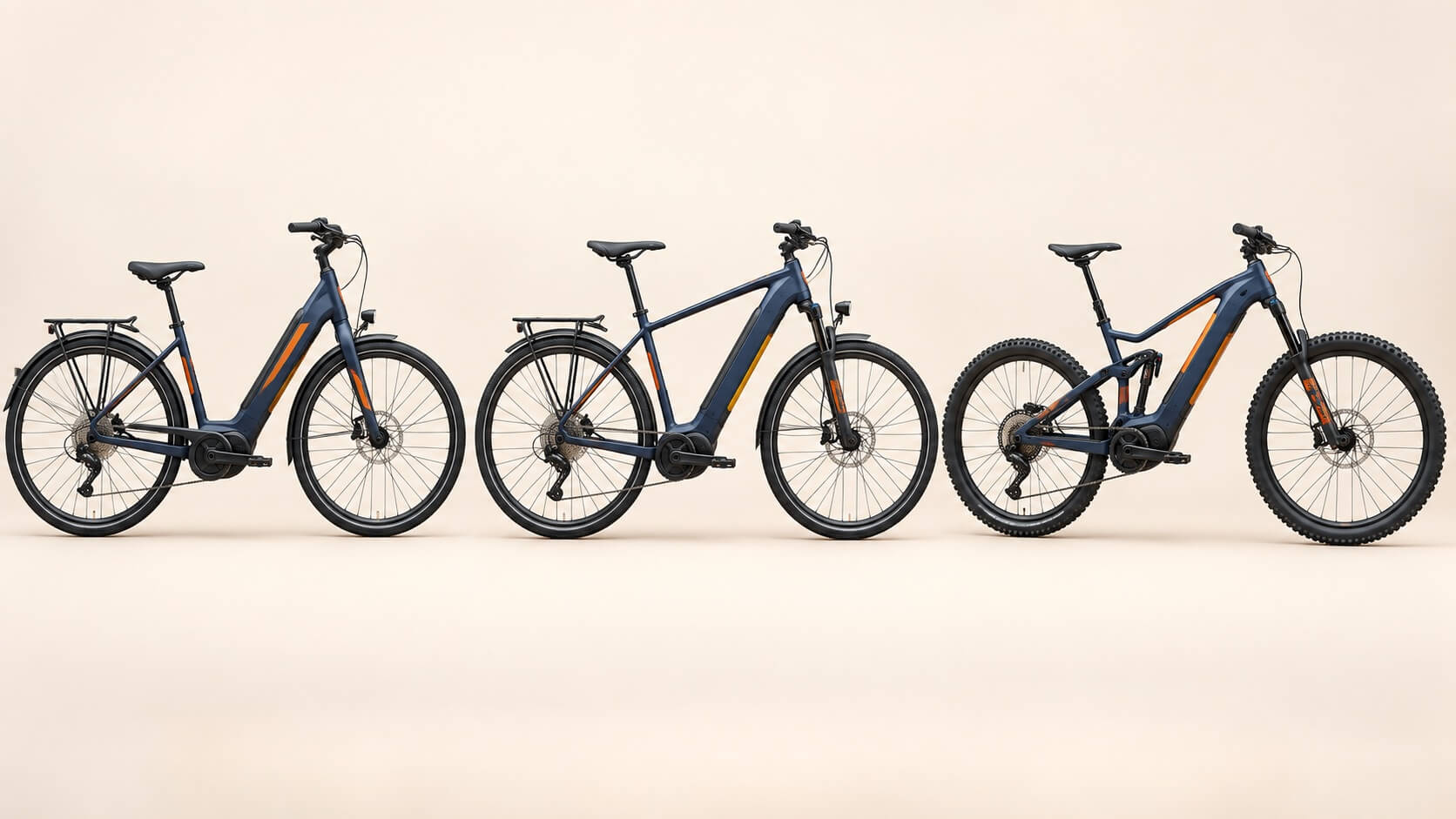
What the three arrangements actually change
| Arrangement | Construction | Buying implication | Check carefully |
|---|---|---|---|
| Rigid | No suspension fork or rear shock | Consider for routes where the complete setup gives adequate comfort and control | Fit, suitable tires and the bicycle’s intended use |
| Front suspension / hardtail | Suspension fork, rigid rear frame | Compare front-wheel response on representative uneven surfaces | Fork setup, service and rear-wheel comfort |
| Full suspension | Suspension fork and a rear suspension system | Consider when the route and permitted riding use justify movement at both wheels | Shock/linkage service, accessory compatibility and total weight |
REI’s suspension overview explains front and rear suspension and setup terminology. Apply that terminology to the exact bicycle: a suspension seatpost cushions the saddle position but is not rear-wheel suspension, and a soft tire does not make a rigid frame a full-suspension frame.
Describe the surface before choosing travel
Write down the sections you ride most often, including their duration. Smooth asphalt with one avoidable pothole is a different problem from kilometres of broken pavement. Maintained gravel is different from a technical mountain trail. Be honest about the route rather than buying for an occasional adventure you may never take.
Ask the seller for the complete bicycle’s intended-use category and load limits. A fork sticker, motor wattage or aggressive appearance does not define what the frame and wheels are approved to do. Confirm any cargo or passenger use separately; a suspension component’s instructions may have restrictions that differ from assumptions about the bike.
If a daily obstacle cannot be ridden safely, route choice and speed remain part of the answer. Suspension is not permission to hit kerbs or damaged road surfaces at speed.
Check fit and tires before blaming a rigid fork
On a demonstrator, have the shop check saddle height, handlebar reach and appropriate tire pressure. A strained riding position or unsuitable setup can make a bicycle unpleasant even when its suspension specification looks impressive. Compare correctly adjusted candidates rather than a neglected rigid bike against a freshly prepared suspension bike.
Use our tire-pressure guide to understand the limits that must be respected. Do not reduce pressure below the permitted range to imitate suspension. Ask the shop to investigate persistent hand, back or saddle discomfort; a different fork is not a universal treatment for pain.
Understand the settings without copying somebody else’s numbers
Travel describes the available suspension movement. Sag is the movement under the rider’s supported load at rest. Rebound concerns the return after compression. Not every fork offers the same adjustments, and an external dial does not establish that it is set correctly for you.
The SR SUNTOUR general fork manual separates sag, air pressure, coil preload and intended use. Its limits are model-dependent. Have the dealer use the instructions for the installed fork and shock; this article does not prescribe a universal sag percentage or air pressure.
Ask for a demonstration of any lockout and its permitted use. Do not assume it should remain locked over rough terrain. Keep a record of the shop’s initial approved settings so you can describe later changes accurately. Do not open a pressurised suspension unit to experiment.
Use the same short test route for each candidate
- Have both bicycles prepared for your actual riding load and the manufacturer’s instructions.
- Start on a safe, permitted route within your ability. Compare steering and controlled braking before seeking rougher surfaces.
- Ride a representative uneven section at an appropriate speed. Notice hand control, rear-wheel impacts and whether the bike feels predictable.
- Try low-speed turns and a normal stop. A bike must remain manageable when the motor contributes little or nothing.
- Check the practical tasks: push it through a doorway, park it and assess the load you need to lift.
Note the observation rather than declaring a winner from a category: “hands remained comfortable on this section” or “rear impacts were still uncomfortable” is useful feedback. Do not invent a performance score or claim that one short ride proves reduced injury risk.
Budget for the service you are actually buying
Ask which workshop services the exact fork and shock, what a routine service includes and whether parts are available. Full suspension also brings rear-system inspection questions. Obtain a quote and the applicable schedule before comparing the purchase prices.
Tern’s fork-maintenance guidance distinguishes basic cleaning from a full service and says to stop riding when structural damage or worn seals require assessment. Its cleaning advice includes avoiding pressure washers. Use the instructions for your own bicycle rather than transferring every step or service interval between brands.
Add the relevant checks to your e-bike maintenance plan. If there is leaking fluid, damaged structure, looseness or a major change in operation, stop and obtain a qualified inspection instead of compensating with another dial setting.
Accessories and upgrades need a separate compatibility check
Confirm that racks, mudguards and any approved luggage configuration work with the bicycle’s full movement. A rear rack suitable for one rigid frame is not automatically suitable for a moving rear assembly. Ask for the manufacturer’s approved arrangement, including the total load limit.
Replacing a rigid fork with a suspension fork is not a simple comfort accessory swap. Frame geometry, axle and headset interfaces, tire clearance, brake mounts and the manufacturer’s approval all matter. SR SUNTOUR warns against a fork that does not match the frame geometry. Use a qualified shop and written compatibility information; do not buy a fork on wheel diameter alone.
Common questions
Is full suspension best for every commuter?
No. Compare the route benefit with servicing, weight, accessories and cost. A correctly chosen simpler bike can be the more practical choice for a smooth journey.
Does a fat tire replace suspension?
It changes one part of the ride, but it does not create controlled movement in the fork or rear frame. Evaluate the complete bike and approved tire setup rather than treating the features as interchangeable.
Can I choose by travel alone?
No. Travel does not establish damping quality, intended use, fit or system condition. Ask about the actual component, setup and service route.
What should I ask for before ordering?
Request the exact fork/shock model, intended-use and load limits, setup demonstration, service quote and approved accessory list. Then test the complete bicycle on a representative safe route.