
How to Lock an E-Bike: Frame, Wheels, Battery and Parking
Lock an e-bike’s frame to a solid fixed anchor, secure both wheels, and deal separately with its battery and removable accessories. Use suitable high-quality physical locks; an app lock, battery key or wheel lock alone does not attach the whole bicycle to anything. Choose where you park as carefully as the lock. No arrangement makes an e-bike theft-proof.
A good routine must work on your actual frame and everyday parking stand. This guide covers pedal bicycles, not motorcycle steering locks or a ranked list of lock brands.
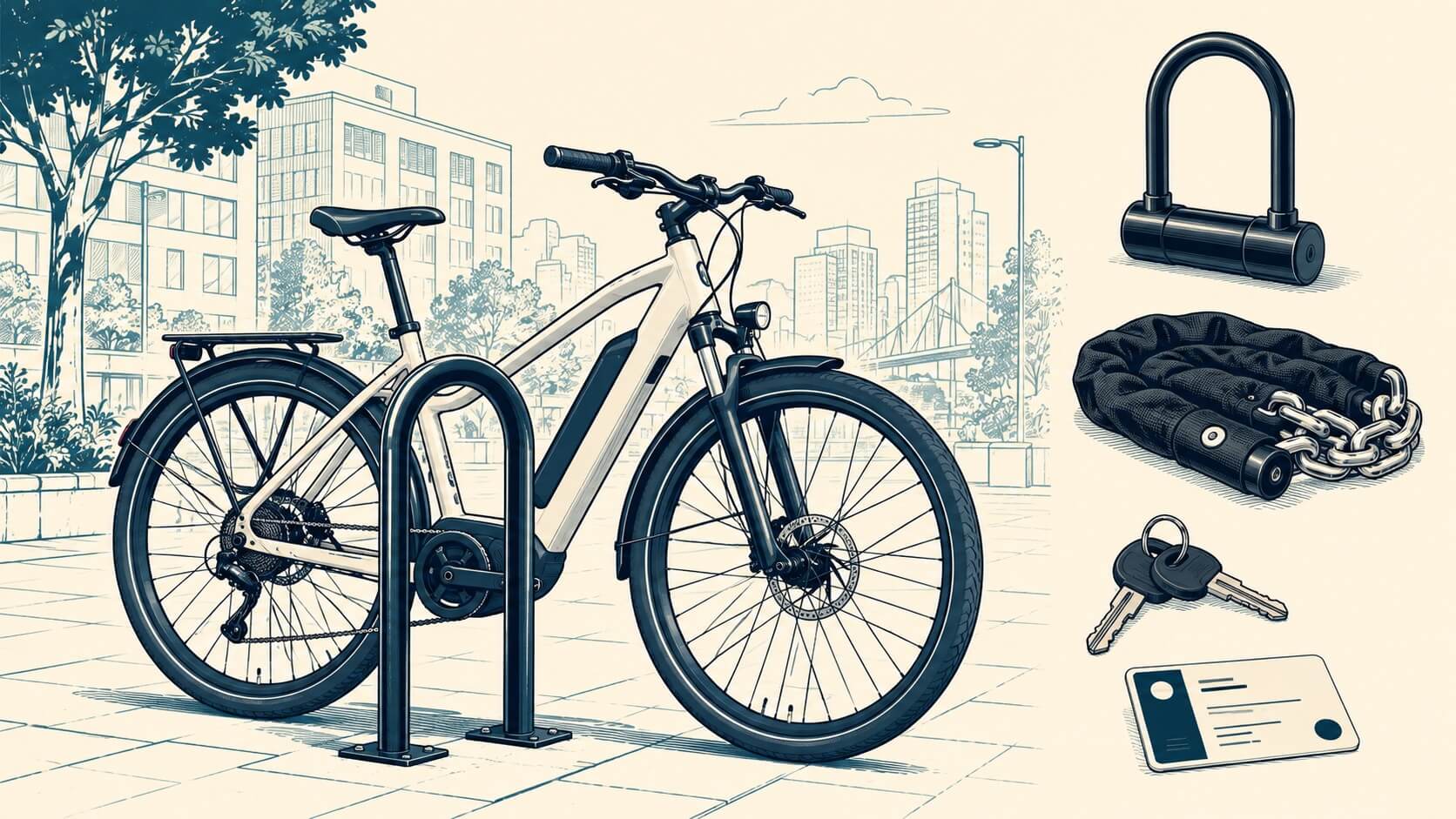
Start with the question behind “which lock?”
In a September 2026 Reddit discussion, a new owner worried about leaving a valuable e-bike unattended even with a substantial lock. An older home-versus-store parking thread raises a different issue: a routine that works in a garage may be awkward during errands. These are useful questions, not theft statistics or evidence that a particular lock cannot be defeated.
Write down your regular stops before choosing equipment. Is the bike outside for a brief errand or a whole shift? Can you bring it indoors? Can you carry the removable battery? Does the available stand let you reach the frame? An expensive lock that you cannot fit at work is the wrong arrangement for that stop.
What needs securing?
| Item | Purpose | Common gap |
|---|---|---|
| Fixed anchor | Attaches the bike to the location | A movable or open-topped object may let the bike leave with the lock attached |
| Frame | Secures the main bicycle | Locking only a removable wheel leaves the frame unprotected |
| Both wheels | Reduces separate wheel theft | The front wheel is forgotten after the main lock is fitted |
| Battery and accessories | Addresses removable valuables | The frame lock does not necessarily secure these parts |
| Identity records | Helps identify a stolen or recovered bike | No frame number or useful photos are saved |
West Yorkshire Police’s e-bike guidance recommends a fixed object, high-quality approved locks and two different lock types where possible. It also advises against relying solely on built-in wheel locks or lightweight cable locks. Its Sold Secure reference is a UK approval context; check the relevant independent rating and any requirements that apply where you live.
A practical lock-up sequence
- Check the stand. Use designated cycle parking where possible. Look for a fixed, intact anchor; reject a loose stand or an object the locked bicycle can be lifted over.
- Position the bicycle. Put a structural part of the frame close enough to the anchor for the chosen lock. Keep the bike stable and clear of pedestrian access.
- Secure the frame. Follow the lock maker’s fitting guidance. Do not treat a cable, brake hose, basket or removable accessory as the frame.
- Secure the wheels. Use the remaining suitable lock arrangement to address both wheels. Check the actual route rather than assuming a lock near a wheel passes through it.
- Finish the detachable items. Remove practical take-with-you accessories, secure the battery as its manual directs and remove the keys.
- Check before leaving. Confirm each lock has closed and the frame remains attached to the anchor. Take a moment to inspect the complete arrangement.
Kryptonite’s e-bike lock-up guide emphasises a close fit, keeping the lock off the ground and accounting for different frame designs. Its illustrations can help you discuss a suitable arrangement with a retailer. This article does not claim to have tested lock resistance.
Will your lock fit a step-through or bulky e-bike frame?
Do a fit trial before committing to a lock. A small U-lock may not accommodate the frame and stand together; a longer lock may be easier to fit but leave unnecessary space. A chain offers a different reach and carrying arrangement. The product’s security assessment still matters—shape or weight alone is not a rating.
Take photos of your bicycle and usual rack to a lock retailer, or bring the bicycle for a demonstration. Ask them to show which structural frame member is captured, how the other wheel is secured, and where the lock sits without pressing on wiring or brake parts. On unusual cargo or folding frames, consult the bicycle maker rather than improvising around a hinge or accessory mount.
Keep three notes from the trial: the exact lock model, the frame-and-anchor route, and the carrying position while riding. Check that the carried lock cannot contact a moving wheel or interfere with steering. If the everyday rack still does not work, change the parking arrangement instead of accepting a wheel-only lock-up.
Should you remove the battery when parking?
When the battery is designed for owner removal and carrying it is practical, taking it with you addresses a separate theft target. Trek’s e-bike FAQ advises owners to bring an easily removable battery inside. Follow your bike’s removal and refitting procedure; an integrated service-removal pack is not an invitation to dismantle the bicycle for each stop.
If the pack stays on the bike, use its intended retaining lock correctly. Do not drill the housing, thread improvised cables through electrical parts or add a restraint that can damage the pack. Ask the manufacturer about model-compatible security accessories.
Carrying a battery indoors does not mean it should be charged anywhere unattended. Use the manufacturer’s storage conditions and an appropriate location. Our battery storage guide covers the separate storage and charging-safety considerations.
Adapt the routine to the parking situation
| Situation | Decide before you arrive |
|---|---|
| Shop or cafe stop | Identify a usable stand and which accessories you will carry; do not skip locking because the visit is brief |
| Workday parking | Ask about authorised indoor or controlled-access storage and test the available anchor with your actual locks |
| Shared garage or building | Check building permission for storage and anchoring; a communal door is not your individual bicycle lock |
| Overnight at home | Plan secure storage, an appropriate anchor and where the battery will be kept, without obstructing an exit |
The Metropolitan Police’s bicycle-security advice covers locking the frame and wheels, secure parking, registration and precautions at home. Lighting and CCTV can support the parking choice, but neither substitutes for a physical lock or guarantees intervention.
App locks, trackers and records: different jobs
Ask the manufacturer what a digital security feature actually disables and what it requires: a charged battery, compatible hardware, connectivity or a subscription may be relevant. An assistance-disable function is not the same thing as physically fastening a bicycle to a rack. A tracker is a recovery aid, not a physical restraint.
Save the frame number, battery identification, purchase record and clear photos somewhere other than only on the bicycle. Use a recognised registration service appropriate to your country. If theft occurs, report it through local police channels and update the register. Give police any tracker information; do not attempt a confrontation or recovery yourself.
Common questions
Is the battery key enough to secure an e-bike?
No. A battery retaining lock and a frame-to-anchor lock perform different jobs. Check what the built-in mechanism secures on your model.
Is one heavy chain better than two locks?
Weight alone cannot answer that. Compare independently assessed security, fit and which parts each arrangement actually captures. Follow relevant lock guidance and check any applicable policy conditions directly.
Can I leave the bike outside overnight?
There is no universally safe parking duration. If secure indoor storage is available, plan around it. Do not interpret a high lock rating as a promise that unattended outdoor storage is safe.
How common is e-bike theft?
It depends on place, time and reporting. Reddit stories cannot establish your local rate. Consult local police data if you need a location-specific assessment; this guide does not invent a global percentage.
Try the routine before your next commute
Test the locks at your usual destination, decide what you will take inside, and save the bike’s identifying details. Add a quick lock-and-key check to your regular pre-ride routine. A workable daily arrangement matters more than a lock you leave at home.
Sources checked: September 2026. This is prevention guidance, not a theft-proof guarantee or a tested lock ranking.